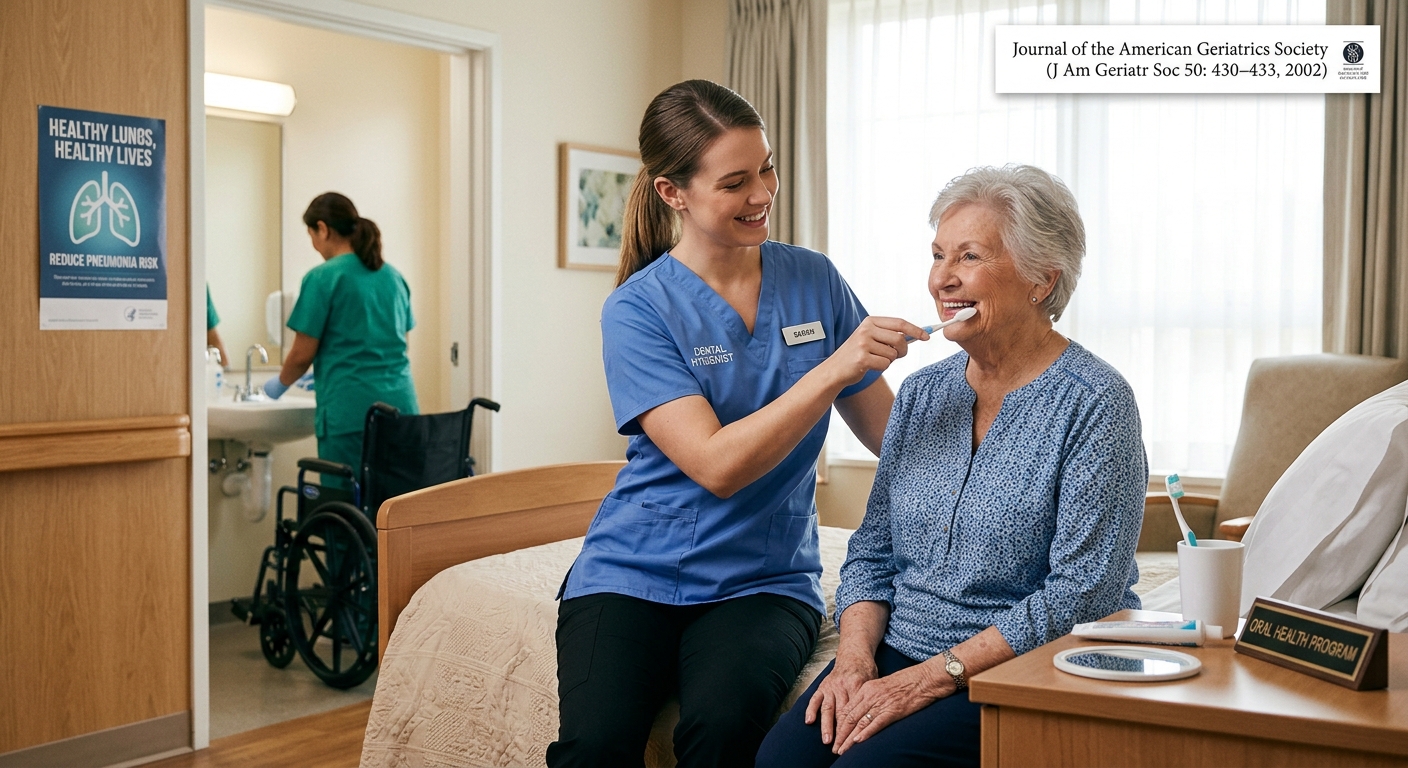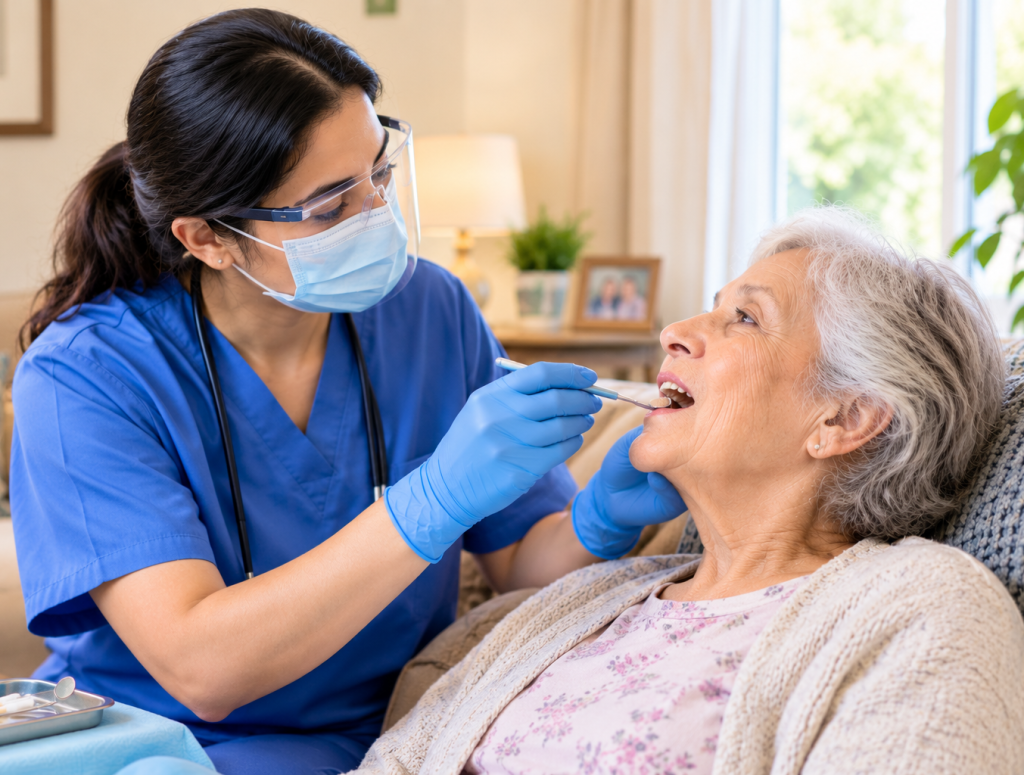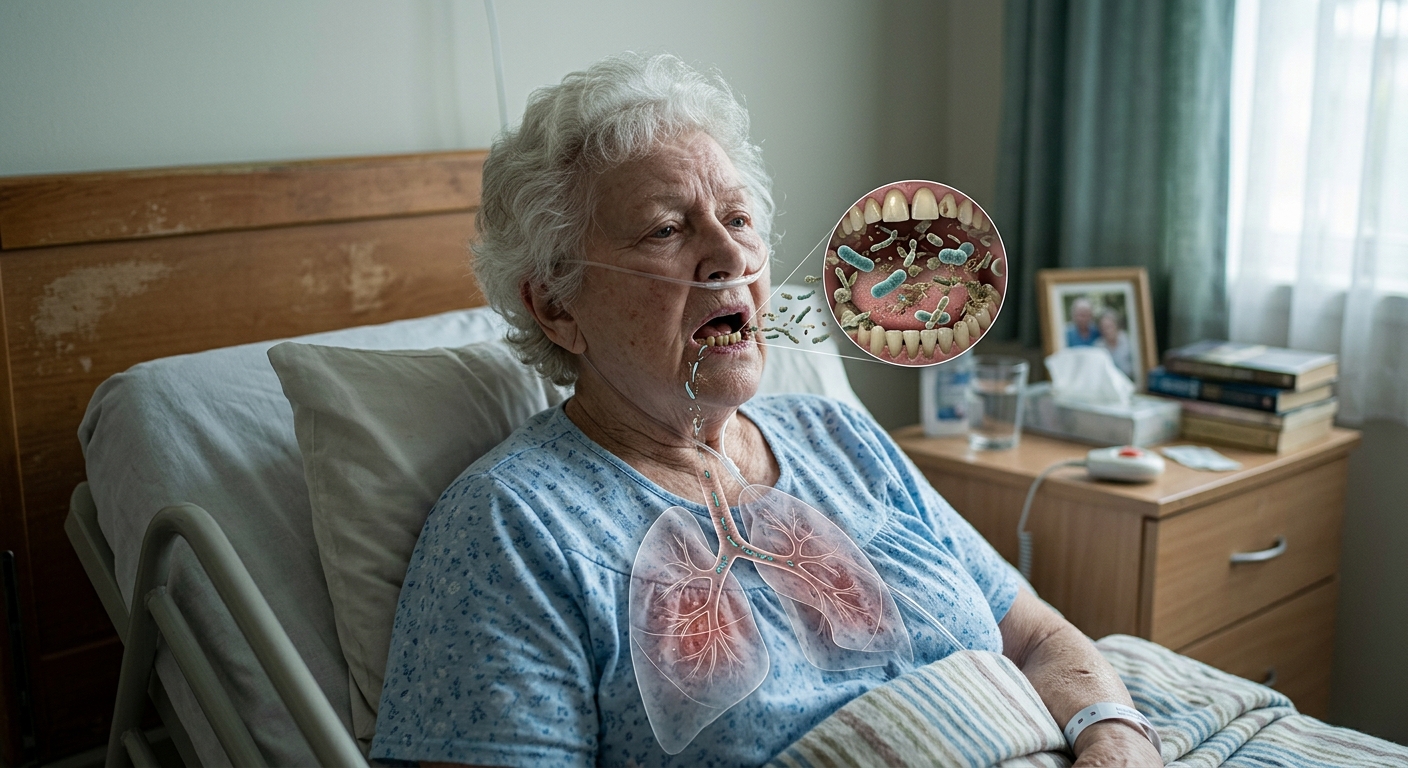
Clinical research consistently confirms that comprehensive oral hygiene is a vital pillar of systemic health and longevity for seniors. Medical studies demonstrate that professional mechanical oral care reduces the risk of life-threatening aspiration pneumonia in long-term care residents by up to 57% while dramatically curbing the systemic inflammation that accelerates cognitive decline. These curated studies outline the peer-reviewed evidence, driving the specialized on-site program that Tender Touch Oral Healthcare provides.

Poor Oral Hygiene, Oral Microorganisms and Aspiration Pneumonia Risk in Older People (60+) in Residential Aged Care: A Systematic Review – Age and Aging Volume 50 Issue 1, January 2021, Pages 81-87

https://academic.oup.com/ageing/article/50/1/81/5868064?utm_source=chatgpt.com&login=false

Findings: Aspiration-pneumonia increases hospitalization and mortality of older people in residential aged care. Three intervention studies found that weekly professional oral care reduced aspiration-pneumonia risk.  The authors concluded that professional weekly oral hygiene could decrease potentially pathogenic oral microorganisms and reduce aspiration-pneumonia risk.
Professional Oral Health Care Prevents Mouth-Lung Infection in Long-Term Care Homes: A Systematic Review- 2023 Oct1;57(3): 180-190 PubMed Central

https://pmc.ncbi.nlm.nih.gov/articles/PMC10662425/?utm_source=chatgpt.com

Premise:   Nursing home-acquired pneumonia (NHAP) is the leading cause of mortality among residents in long-term care communities.  Aspiration pneumonia is one cause of nursing home acquired pneumonia.

Findings: Dental hygienists can provide clinically effective onsite oral health care, once per week, and caregiver/healthcare aids can provide mouth care twice per day, to reduce the risk of oral and lung infection among all dependent long-term care residents.   It was determined that removal of bacterial plaque and debris from residents’ teeth, gums and dentures can reduce oral infections and related pneumonia/aspiration pneumonia.

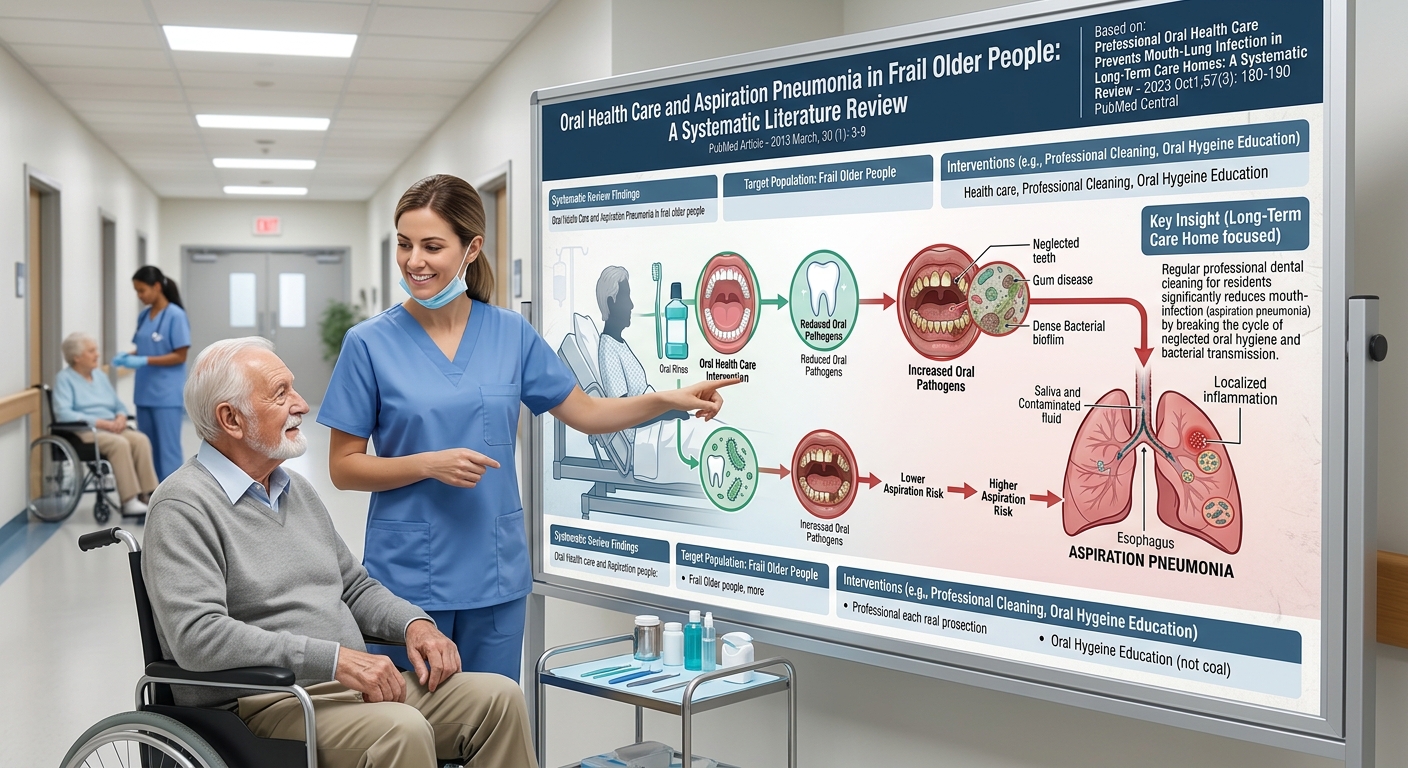
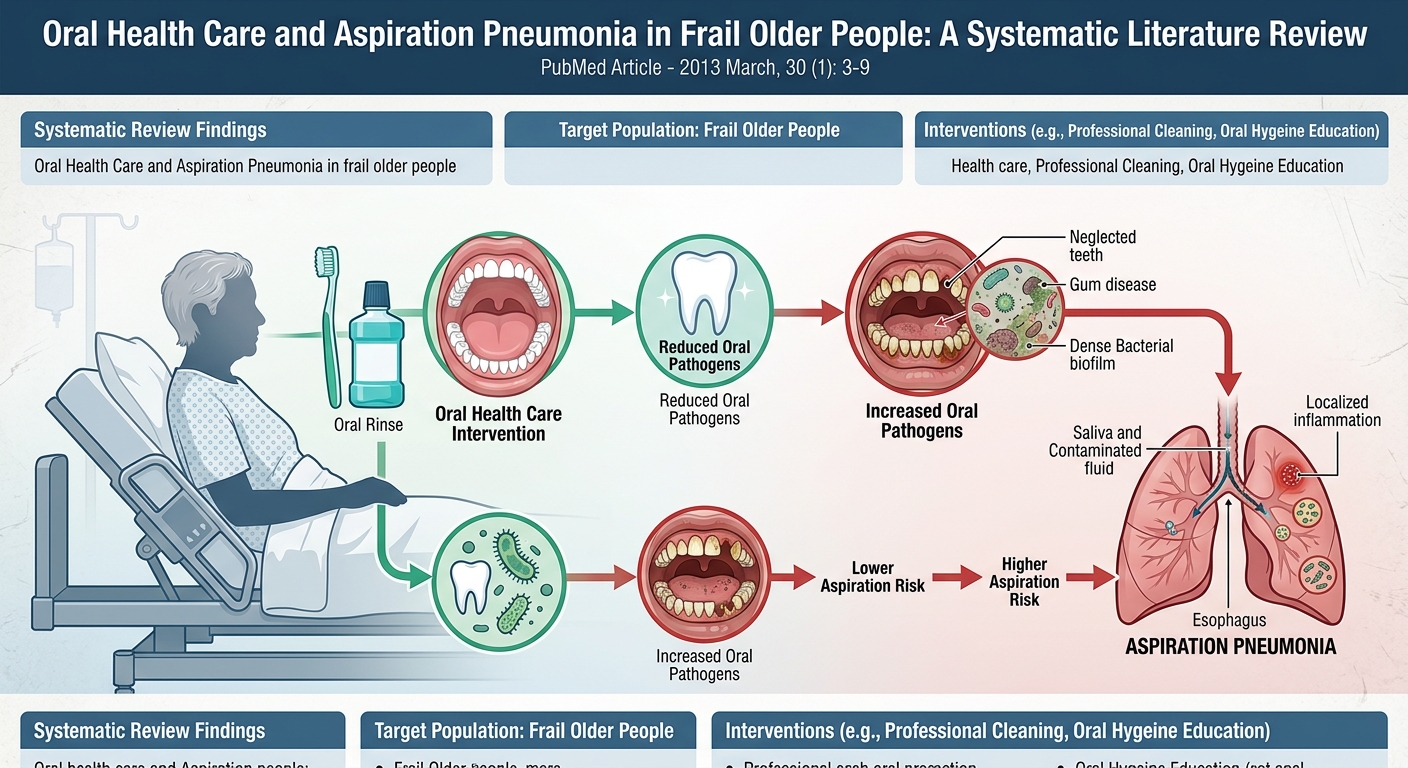
Oral Health Care and Aspiration Pneumonia in Frail Older People: A Systematic Literature Review- PubMed Article-2013 March, 30 (1): 3-9

https://pubmed.ncbi.nlm.nih.gov/22390255

Findings: Five publications were included and reviewed. Two studies showed improved oral health care diminished risk of developing aspiration pneumonia and the risk of dying from aspiration pneumonia directly.  Three studies showed adequate oral health care decreased the amount of potential respiratory pathogens and suggested a reduction in the risk of aspiration pneumonia by improving swallowing reflex and cough reflex sensitivity.

This current systematic literature review defined oral health care: “toothbrushing after each meal, cleaning dentures daily and professional oral health care once a week”.

 Oral Care Reduces Pneumonia in Older Patients in Nursing Homes- Journal of the American Geriatrics Society (J Am Geriatr Soc 50: 430-433, 2002

Premise: The study involved 417 nursing-home residents, toothbrushing daily by caregivers and professional toothbrushing, flossing care by dentists or dental hygienists once a week.

https://agsjournals.onlinelibrary.wiley.com/doi/10.1046/j.1532-5415.2002.50106.x?utm_source=chatgpt.com

Findings:  Follow-up demonstrated that pneumonia, febrile days, and death from pneumonia decreased significantly in patients with oral care.   Activities of daily living, and cognitive functions showed a tendency to improve with increased oral care.

Related Resources ~ Helpful Insights

1. Oral Care Reduces Pneumonia in Older Patients in Nursing Homes

2. Professional Oral Health Care Reduces Oropharyngeal Bacteria

3. Professional Oral Health Care and Fatal Aspiration Pneumonia

4. Professional Oral Health Care by Dental Hygienists Reduced Respiratory Infections

5. Toothbrushing and Pneumonia Mortality in Older Adults